
Piano Cat: Music Games
Agile Lion GamesMusic
4.63.00 Reviews
- Version
- 0.2.0
- Installs
- 1.00M
- Age Rating
- Everyone
Screenshots
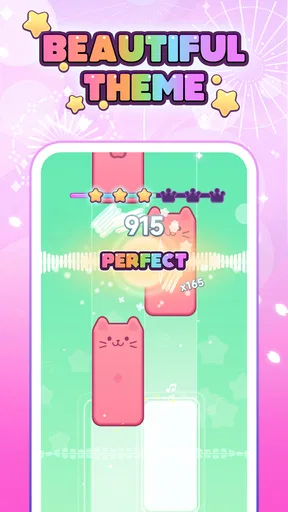
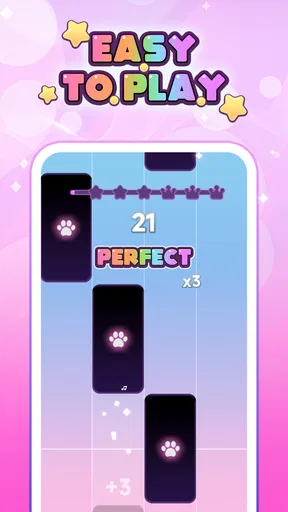
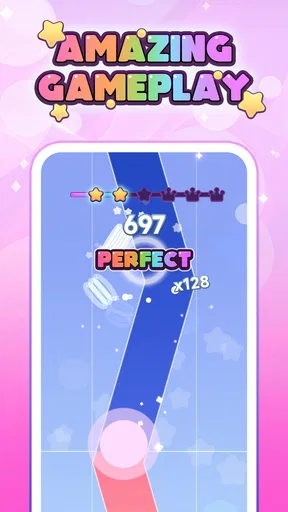
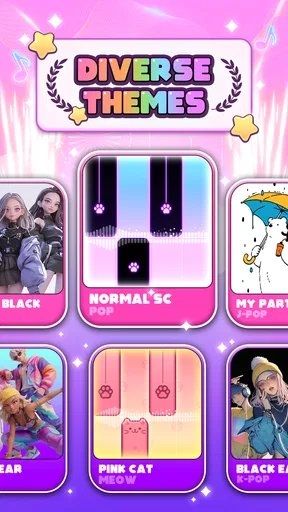

Our Review of Piano Cat: Music Games
 Analysis by Appyee
I downloaded Piano Cat: Music Games expecting a very simple music game, and that is exactly where its appeal begins. The idea is easy to understand: tap the cat-shaped piano tiles as songs play, keep your attention on the rhythm, and try another round when the previous one ends. There is no complicated setup to learn before the first note, which makes it a comfortable choice when I want a quick game rather than a long commitment.
What makes the experience worth discussing is not the basic premise alone, but the small loop built around it. I tap, receive immediate musical feedback, reach the end of a song or make a mistake, and then decide whether the result was good enough to stop. That last choice matters because the game is clearly designed around short attempts. It is the kind of title I can open while waiting for an appointment, during a short break, or when I want something light before bed.
Agile Lion Games presents this as a free music game for everyone, and the accessible design matches that positioning. It is available for devices running Android 7.0 or later, and the current version is 0.1.5. The game has an average rating of 4.3 from 56 ratings and has passed 50K installs, which suggests that its straightforward format has found an audience without pretending to be a full piano-learning tool.
How the tap-and-retry loop feels in practice
When I’m deciding whether to retry, I find it useful to change just one thing at a time: loosen my tapping hand, shift my focus to the next tile, or pause briefly before starting again. That makes each attempt a small test rather than a string of hurried repeats. It also helps me tell whether I’m learning the rhythm or simply getting tired.
The first tap is the whole tutorial
The best part of the opening experience is that I do not need a long explanation to understand what to do. The cat tiles are the visual focus, and the piano-song format gives the screen an immediate purpose. I watch for the next tile, tap it, listen to the response, and continue. That first action is important because it tells me almost everything I need to know about the game: timing matters, attention matters, and the cute presentation is wrapped around a rhythm challenge rather than a passive music player.
This simplicity makes the game friendly to younger players and to anyone who does not usually play rhythm games. The Everyone content rating also fits the cheerful presentation. I could hand the device to someone unfamiliar with mobile games and explain the objective in a sentence. That does not mean every song is effortless, though. As the pattern becomes less comfortable, the difference between tapping near the beat and reacting too late becomes more noticeable.
I also like that the game does not ask me to think about several systems at once. There is no need to manage a character, build a collection, or understand a map before enjoying the music. The first minute is focused on the relationship between the moving tile, my finger, and the sound that follows. For a casual title, that focus is valuable.
Feedback turns each tap into a small decision
Rhythm games depend on feedback, and this one works best when I treat every tile as a small decision instead of tapping randomly. A successful tap keeps the musical flow moving and gives me a reason to trust my timing. A missed or poorly timed action breaks that confidence and makes the next attempt feel like a chance to correct one specific mistake.
The cute cat theme helps soften that pressure. The game feels playful rather than severe, so a failed run does not carry the frustration of a competitive music title. At the same time, the piano setting gives the taps a clearer identity than ordinary reaction games. I am not simply pressing colored buttons; I am trying to stay with a song. That difference makes the feedback feel more satisfying, especially when several taps arrive in a pattern I can anticipate.
One useful habit I developed was to focus on the next tile rather than stare at the one I had just tapped. New players often look for confirmation after every action, but that can make them late on the following note. With this type of game, the sound and visual response are most helpful when they confirm a rhythm I am already following. If I wait for reassurance before moving on, the feedback becomes a distraction instead of a guide.
Why the reward is often another attempt
The reward in Piano Cat is not only the song itself. It is the feeling of completing a clean sequence, improving my timing, and seeing how far I can get before the rhythm catches me. That is a modest reward, but it suits a game built around short sessions. I do not need a large progression system to feel that a second attempt has a purpose; the previous run gives me a personal target.
This is where the game differs from a conventional piano-learning app. A learning app usually asks me to slow down, study notes, repeat exercises, and build a skill that transfers to an instrument. Here, I am playing for reaction, concentration, and entertainment. The piano sounds provide atmosphere and structure, but I would not use this game as a substitute for lessons or serious practice.
It also differs from larger rhythm games that often rely on elaborate song libraries, recognizable performers, online events, or extensive customization. Piano Cat feels more immediate and less demanding. That is a strength when I want a compact distraction, but it can become a limitation if I expect deep progression or a broad musical community. The game rewards my next attempt mainly because I want to improve my own performance, not because I am climbing a large competitive system.
The reset is what keeps the session moving
A good short-session game needs a reset that feels natural. After a run ends, I can mentally separate the previous attempt from the next one: I remember where my timing slipped, take a breath, and start again. That reset is a major part of the appeal. The game does not require me to prepare for a long campaign, so restarting feels like correcting a small problem rather than reopening an unfinished project.
In an everyday situation, I might play while waiting for a coffee order. I have enough time for one attempt, and if the queue moves slowly, I can begin another without needing to remember a complicated objective. The first round helps me settle into the rhythm; the second gives me a chance to react better to the section that caused trouble. If my order is ready, I can close the game without feeling that I have abandoned anything important.
The same structure works during a short commute or a quiet break, although I would be more careful in a noisy environment. Rhythm games depend on concentration, and outside distractions can make a fair challenge feel harder than it really is. Playing offline is particularly useful here because it makes the game suitable for moments when I have no connection, such as travel or areas with unreliable service. That offline quality is one of the more practical reasons to keep it installed.
Small techniques that make the game more enjoyable
My first tip is to use a light touch. Pressing too hard does not improve timing, and it can make the hand tired during repeated attempts. A relaxed finger is easier to move from one tile to the next, especially when the pattern changes direction. I also found it better to keep my attention near the active area of the screen rather than watching the entire display. The less visual space I try to process, the easier it is to anticipate the next action.
My second tip is to treat the beginning of a run as a warm-up rather than an immediate test of perfection. Early taps help me learn the song’s pace and understand whether I am reacting too quickly or too slowly. If I fail later, I can identify whether the problem was a sudden pattern, a lapse in attention, or simply a rhythm I had not yet internalized. That makes the retry more useful than blindly pressing the start button again.
My third tip is to stop after a genuinely frustrating streak instead of forcing endless retries. The loop is effective because another attempt feels achievable. Once I am tapping tensely, I stop hearing the musical pattern and start chasing individual tiles. A short break often helps more than immediate repetition. This is a small but important trade-off: the game is good at inviting one more round, but the player still needs to decide when practice has become fatigue.
Who will enjoy it, and who should choose something else
I would recommend this game to casual players who like music-based interaction, cute visual themes, and offline entertainment. It is especially suitable for someone who wants a free title that can be understood quickly. Families may also appreciate the approachable presentation and Everyone age rating, provided younger players are supervised in the same way they would be with any mobile game.
It is less suitable for someone searching for a realistic piano simulator. Tapping tiles to follow songs can improve attention and rhythmic awareness, but it does not teach finger placement, scales, chords, reading notation, or expressive playing. For those goals, a dedicated instrument-learning app or an actual keyboard would be the better choice.
I would also point experienced rhythm-game fans toward a larger alternative if they need a deep catalog, advanced customization, or a strong competitive structure. Piano Cat is more appealing when I value quick access and a gentle presentation over breadth. Its current version, 0.1.5, reinforces my impression that it is a compact experience rather than a huge platform with layers of content.
What the free format means for expectations
The fact that the game is free makes it easy to try without turning the decision into a major commitment. That matters for this kind of casual title because the core question is personal: do the cat tiles and piano rhythm make me want to play another short round? If the answer is no, I have not invested much time learning a complex system.
At the same time, free does not automatically mean complete for every type of player. Someone who wants a long-term hobby may quickly notice that a simple tap-and-retry loop has a narrower range than a full music game. I would approach it as a snack-sized game, not as the one music title I will use for every mood. Its value comes from being available when I want a quick burst of concentration.
The store summary highlights offline play, and that is more than a minor convenience in my experience. It changes where the game fits into a daily routine. I can use it in a waiting room, on a flight, or during a connection-free trip without planning around a network. The trade-off is that an offline-first experience naturally feels more self-contained than games built around constant online activity.
The complete loop: action, feedback, reward, reset
After spending time with it, I see the game’s design as a clean four-step cycle. First, I tap a cat tile in response to the song. Then I receive immediate musical and visual feedback that tells me whether my timing is holding together. The reward is a smoother sequence and the satisfaction of reaching further or playing more accurately. Finally, the run resets, leaving me with just enough information to decide whether another attempt might go better.
That loop succeeds because every part supports the next one. The action is simple enough to begin instantly. The feedback gives the taps meaning. The reward is personal improvement rather than an inflated promise. The reset removes friction and makes a new session feel reasonable. When those pieces align, a short game does not need a complicated story to hold my attention.
There are limits. The same simplicity that makes the game welcoming may leave players wanting more variety over time. It is not a replacement for piano education, and it is not aimed at people who need a large social or competitive music platform. I also would not choose it when I want a slow, relaxing listening experience, because the need to watch and react keeps me mentally active.
For the right player, though, those limits are easy to understand. Agile Lion Games has made a focused music game that works best in brief bursts, with a friendly cat theme and an uncomplicated path from opening the app to making the first tap. I would recommend it to a friend who wants a free, offline rhythm game for casual sessions. Its strongest quality is the reason each attempt feels worth repeating without demanding a long commitment.
Privacy and Permissions
See what permissions an app requests and how it handles your data.
- Wi-Fi connection information
- view Wi-Fi connections
- Other
- view network connections, full network access, control vibration, prevent device from sleeping, Google Play license check
Verdict
Strengths of Piano Cat: Music Games
- Simple controls make it easy for beginners to start playing.
- Cute cat visuals give the game a playful, family-friendly style.
- Short songs fit well into quick gaming sessions.
- Gradual challenges can help improve timing and finger coordination.
- Lighthearted gameplay is suitable for casual, stress-free entertainment.
Limitations of Piano Cat: Music Games
- Some songs or features may require in-app purchases to unlock.
- Repeated tracks can make the experience feel limited over time.
- Fast notes may be difficult for younger players or beginners.
- Ads may interrupt gameplay, depending on the app version.
- The game offers limited depth for users seeking a serious piano simulator.
Other Releases by Agile Lion Games
View All
Rhythm Tiles: Pop Songs
Casual4.6
Similar Picks in This Category
View All
Tiles Hop Music & Ball Game
AMANOTES PTE. LTD.4.3

Magic Tiles 3™ - Piano Game
AMANOTES PTE. LTD.4.6

Real Piano
Bilkon3.7

Piano Game: Classic Music Song
Dream Tiles Piano Game Studio4.0

Smash Colors: Music Ball Rush
BADSNOWBALL HONGKONG LIMITED4.2

Piano Music Go-EDM Piano Games
Joy Journey Music Games4.5
Frequently Asked Questions
What is Piano Cat: Music Games?
Piano Cat: Music Games is a casual rhythm app that combines piano-tile gameplay with cute cat characters and colorful visuals. The main objective is to tap the correct tiles in time with the music, gradually increasing your speed and accuracy. It is designed for short, entertaining sessions and can appeal to both children and adults who enjoy simple music challenges.
How do you play Piano Cat: Music Games?
Gameplay is generally easy to understand: select a song or challenge, then tap the piano tiles as they appear on the screen. Missing tiles or tapping at the wrong time can reduce your score or end the round, depending on the mode. As songs become faster, timing and concentration matter more. Headphones can make the rhythm easier to follow.
Is Piano Cat: Music Games free to download and play?
The app can typically be downloaded without an upfront payment, but the free experience may include advertisements, optional purchases, or limitations on certain songs, items, and features. Before installing, it is worth checking the current store listing for details about in-app purchases. Parents should also review purchase settings if children will be using the device.
Does Piano Cat: Music Games require an internet connection?
Some parts of Piano Cat: Music Games may work without a constant internet connection, especially basic gameplay that has already been installed. However, internet access can be required for advertisements, downloading additional content, synchronizing progress, or accessing online features. Availability may also vary by version, so testing the app in offline mode is recommended before relying on it during travel.
Is Piano Cat: Music Games suitable for children?
The colorful cat theme, straightforward controls, and short music challenges make Piano Cat: Music Games accessible to younger players. Nevertheless, adults should check the app’s age rating, advertising policy, and in-app purchase options before allowing unsupervised use. Fast levels may become challenging, while repeated tapping can be tiring during long sessions, so breaks are a good idea.
Play our best games!


